What if nothing you’ve been taught about psychosis, mania, or OCD is the full picture?
What if voices, intrusive thoughts, visions, and altered states are parts trying - in the only way they can - to communicate something important?
These are experiences we’ve been taught to:
Fear
Diagnose
Manage
But what if these states are not random, not broken -
but organised, protective, and meaningful?
5-week live online workshop
Group 1 starting July 16
Group 2 starting July 27

Sophie Little
"I recently trained with Stephanie Mitchell for non ordinary states. One of the best trainings out there!"
A different way of understanding
Experiences that get labelled as psychosis, mania, OCD, schizophrenia, and other non-ordinary states can feel overwhelming — both for the person living them and for friends, family and practitioners trying to support them.
Many practitioners are left wondering:
How do I respond to this?
What is actually happening here?
How do I make this person see more clearly?
How do I stay connected without reinforcing or shutting things down?

In Internal Family Systems (IFS), we begin from a different place:
That these are not simply symptoms to eliminate —
but expressions of parts trying to protect.
Even when they appear chaotic, intrusive, or extreme,
there is often an underlying logic, intention, and intelligence.
What if these experiences make sense?

Parts don’t always communicate in ways that are easy to understand.
Sometimes they show up as:
metaphoric or poetic language
auditory voices
intrusive thoughts
compulsive urges
expansive or accelerated states
visions or altered realities
These are not mistakes.
These ways of communicating are not a form of brain anomoly but a carefully constructed ways of communicating, to allow the client to feel safe from internal and external scrutiny, while still protecting the system from being overwhelmed by the pain that exiles carry and want known.
When we learn how to listen differently, what once felt confusing can begin to reveal meaning.
Prior Student
"I felt my parts spontaneously unburden the fear they held around psychosis, during this class. The energy and clarity you bring, Stephanie, helps my parts to feel safe."
WHAT THIS Workshop OFFERS
In this workshop, we explore:
-

An IFS understanding of experiences labelled as psychosis, mania, OCD, schizophrenia, and other non-ordinary states

-
The traumagenic origins of these experiences
-
How parts communicate through metaphor, symbolism, and altered perception
-
Why parts may conceal meaning in order to create safety
-
How to understand these states in a non-pathologising way
-
Why even extreme experiences can be organised, protective, and purposeful
-
How to create a relationally safe therapeutic container
-
How clients’ voices and parts can begin to unblend when they begin to feel safe in relationship
-
The core wounds of shame and powerlessness underlying these protectors
-
Ways to support clients and their families
-
Titrated approaches to allow knowing and not-knowing to arise and fall away at the pace of safety for the system
-
Learn to listen to what is under what is said.
-
And more...
If you’ve ever felt unsure what to do…
If you’ve ever sat with a client experiencing:
- voices or visions
- intrusive or obsessive thoughts
- compulsive behaviours
- manic or highly activated states
- or other forms of altered reality


…and found yourself:
- Unsure how to respond
- Afraid of getting it wrong
- Pulled between convincing, frustration, rationalizing or confusion
- Or sensing that there is meaning here, but not knowing how to access it?
You’re not alone.
And you’re not missing something.
You may simply not have been shown a way to listen to what is under what is said.
When we begin to understand
When these experiences are met differently:
- Fear can begin to soften in the client and practitioner
- Parts who create intrusive thoughts or bring overwhelm can begin to be held in clarity and compassion.
- Meaning can emerge from what once felt chaotic
- The practitioner and client can work as a team to understand these experiences better.
Not by forcing change —
but by relating to these experiences in a fundamentally different way.
What Will You Learn Each Week?
-
Week #1 : IFS view of psychosis, bipolar & OCD
Trauma, dissociation and disorganized attachment - understanding non-ordinary states of consciousness
Understanding themes of power and powerlessness
Spiritual emergence, personal crisis and the experience of existential anihilation - listening to clients' perspectives
Understanding the parts involved in drug induced 'psychosis'
-
Week #2 : Communicating while concealing
Double Bind Theory of Schizophrenia
Ronald Laing, Eleanor Longden and communicating while concealing
Parts mapping in a Dissociative system
Working with delusion and avoiding the negation trap
-
Week #3 : IFS approaches to relational safety making and Emotional CPR as a tool to support the process
Moving towards and away from what cannot be known as parts allow.
Listening to what is under what is said and learning a different type of pacing.
When to challenge and when to follow.
Understanding the clients need to externalise their locus of control to also externalise the "not me" of the shame they try not to see
Mentalization and metacognition for the client that "cannot know"
-
Week #4 : Open Dialogue, Voice Dialogue, UBs
Working with families - part of the solution and part of the problem
Contemplating the question of UBs for those experiencing non-ordinary states
Talking with parts and voices when clients are afraid of their voices
Considering functional medicine solutions as part of the support strategy for healing. A "both/and" approach
-
BONUS - Week #5 : Healing Voices Film and discussion
View the Healing Voices documentary, about recovery from experineces that get diagnosed as 'psychosis', 'schizophrenia' or 'mania'. From those who have recovered outside mental health and psychiatric constraints


Previous Student
"This class is a wonderful collation of research, stories, practical tips and inspiration for recovery. Stephanie's knowledge is so broad, and she presented in a way that was accessible to me.
I felt different in my client work from week one and am surprised by the small changes that have made a big impact on my therapeutic work. Thanks for all your work in this area, Stephanie."
What Will You Learn Each Week?
-
Week #1 : IFS view of psychosis, bipolar & OCD
Trauma, dissociation and disorganized attachment - understanding non-ordinary states of consciousness
Understanding themes of power and powerlessness
Spiritual emergence, personal crisis and the experience of existential anihilation - listening to clients' perspectives
Understanding the parts involved in drug induced 'psychosis'
-
Week #2 : Communicating while concealing
Double Bind Theory of Schizophrenia
Ronald Laing, Eleanor Longden and communicating while concealing
Parts mapping in a Dissociative system
Working with delusion and avoiding the negation trap
-
Week #3 : IFS approaches to relational safety making and Emotional CPR as a tool to support the process
Moving towards and away from what cannot be known as parts allow.
Listening to what is under what is said and learning a different type of pacing.
When to challenge and when to follow.
Understanding the clients need to externalise their locus of control to also externalise the "not me" of the shame they try not to see
Mentalization and metacognition for the client that "cannot know"
-
Week #4 : Open Dialogue, Voice Dialogue, UBs
Working with families - part of the solution and part of the problem
Contemplating the question of UBs for those experiencing non-ordinary states
Talking with parts and voices when clients are afraid of their voices
Considering functional medicine solutions as part of the support strategy for healing. A "both/and" approach
-
BONUS - Week #5 : Healing Voices Film and discussion
View the Healing Voices documentary, about recovery from experineces that get diagnosed as 'psychosis', 'schizophrenia' or 'mania'. From those who have recovered outside mental health and psychiatric constraints
Previous Student
"This class is a wonderful collation of research, stories, practical tips and inspiration for recovery. Stephanie's knowledge is so broad, and she presented in a way that was accessible to me.
I felt different in my client work from week one and am surprised by the small changes that have made a big impact on my therapeutic work. Thanks for all your work in this area, Stephanie."
Times & Dates
Option 1:
American morning & UK/Europe evening
Thursdays
-
DATES 2026
Thursdays
July 16th, 23rd & 30th
August 6th & 13th
-
TIMES
10 - 11:30am PDT (Oregon)
11 - 12:30pm CST (Costa Rica)
1 - 2:30pm EDT (NY)
6 - 7:30pm BST (London)
7 - 8:30pm CEST (Rome)
-
-


Option 2:
American evening & Australasian morning
American Monday evening
-
DATES 2026
July 27th
August 3rd, 17th, 24th, 31st
-
TIMES
4:30pm - 6:00am PDT (Oregon)
5:30pm - 7:00pm CST (Costa Rica)
7:30pm - 9:00pm EDT (NY)
-
-
Australasian Tuesday morning
-
DATES 2026
July 28th
August 4th, 18th, 25th
September 1st
-
TIMES
7:30am - 9:00am AWST (Perth)
7:30am - 9:00am CST (Beijing)
9:30am - 11:00am AEST (Brisbane)
11:30am - 1:00pm NZST (Auckland)
6:30am - 8:00am ICT (Bangkok)
-
-
👉️👉️This is an online group, based on CST Time, Costa Rica, (please take into account the time zone where you live and plan for daylight savings changes in October or November 2026).
Time changes happen on different dates around the world, so please double-check your local time zone to stay aligned.
Course Contribution
We recognise that people joining this course come from very different financial realities and parts of the world.
In the spirit of community care, accessibility, and shared support, we offer three contribution options. We invite you to choose the option that feels most aligned and sustainable for your system and circumstances.
Regular
Contribution
$450 USD
Early Bird:
$400 until June 15
This contribution reflects the full value of the course and supports the ongoing sustainability of this work.
If this price feels accessible for you, we invite you to choose this option.
Payment plan*: 3 x $155
Pay It Forward Contribution
$550 USD
Early Bird:
$500 until June 15
For those with greater financial capacity who would like to support wider accessibility to this course.
Choosing this option helps make community-supported places possible for others.
Payment plan*: 3 x $190
Community
Supported
$320 USD
Early Bird:
$300 until June 15
For those experiencing financial hardship, reduced access to resources, currency inequity, disability, caregiving responsibilities, unstable income, or other circumstances that make the regular price difficult.
This option is offered in trust, with no explanation needed.
Payment plan*: 3 x $110
Get your ticket
*All fees must be paid before the course begins.
Scholarships
We are fortunate to be partnering with Parts Companion to offer scholarships to help make this work more accessible to the global majority.

Parts Companion is an AI-powered therapy companion for IFS and parts work practitioners and clients to use together. It helps clients integrate the work they're doing with their practitioner through personalized notes, part visualizations, and guided meditations — and helps practitioners grow through session assessments and AI consulting. HIPAA compliant and not-for-profit.
Location
Online Event
Refund Policy
To view our course & workshop Terms & Conditions including our refund policy: CLICK HERE
This workshop is for you if:
- You are an IFS therapist or practitioner working looking to broaden your skill set
- You are IFS-informed (or curious) and want to deepen your understanding
- You work with clients experiencing psychosis, OCD, mania, or other extreme states
- You are looking for a way to respond that feels grounded, respectful, and effective
Please note: This course is not affiliated with the Internal Family Systems Institute (IFSI) nor is it a substitute for nor equivalent to the IFS Institutes Level 1, 2 or 3 trainings. To become IFS certified, you must complete the IFS Institute's Level 1 training and complete the certification process.

A little more about me...
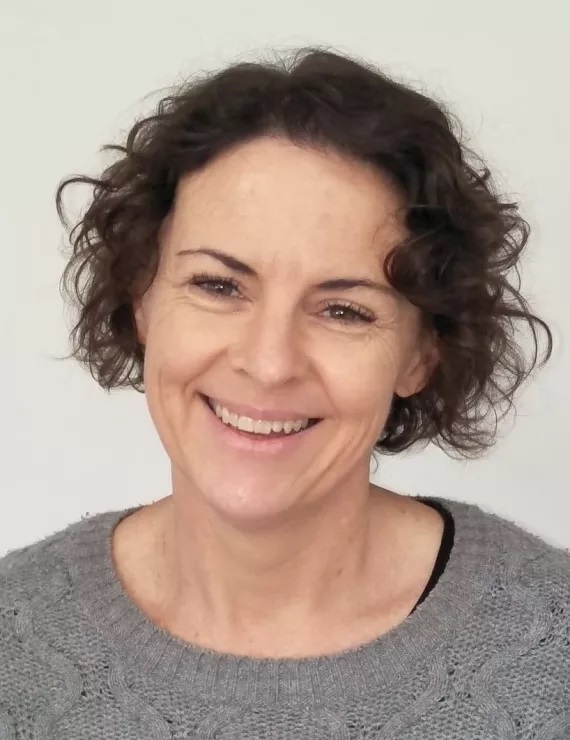
My name is Stephanie Mitchell and I'm a
Certified Level 3 IFS Therapist working in private practice in Costa Rica.
I specialise in working with complex trauma and experiences which often get labelled as 'mental illness'.
I'm interested in how healing and change occur in the human to human relationship, within spaces of relational safety and acceptance and outside the constructs of diagnostic labels.
I work exclusively in the IFS Model and have undertaken extensive training in IFS including 100+ hours with Richard Schwartz. I am passionate about working in highly nuanced and attuned ways within the Model. I bring these nuanced approaches to all my teaching.
Believing that a therapist can only take a client as far as they themselves have travelled I have undertaken over 800 hours of my own personal therapy in the IFS Model and I am deeply acquainted with my own parts, embodying the model from the inside out.
I am passionately committed to a Self-led life, where my parts trust me and I have the capacity for the all important You-turn that is the cornerstone of the IFS Model.
This approach is what I believe is the point of difference in my workshops as I bring a Self-led quality of Clarity, Connection, Compassion and Curiosity to the course, welcoming all parts of the student and being open to my own You-turns when necessary.
I have also undertaken extensive personal studies in shame, transference, relational psychotherapy, Interpersonal Neurobiology, and attachment theory, as I designed this course.
I began teaching about IFS for early developmental trauma in 2019 at the international conference “Re-Awaken” where I was one of the Keynote speakers.
Since then I have presented at the IFS Conference on IFS and experiences that get diagnosed as “psychosis”, along with teaching in the UK, Canada, Australia, US and Spain on using IFS with highly distressed clients - whatever their ‘diagnosis’ is. I am also currently undertaking research alongside Professor Ian Whitmarsh, at UCSF, on IFS and psychosis.
I am also a passionate advocate and activist for social and systems change towards non-pathologising and compassionate approaches to mental distress and am involved at national and international levels around mental health reform.
Please sign up to our email list and stay informed about upcoming events.
© Copyrights by Connection Heals. All Rights Reserved.